The Comprehensive Guide on How to Learn Geography Without Memorizing
The traditional approach to geography is fundamentally flawed. For decades, students have been taught to treat the world map like a grocery list, attempting to force hundreds of disconnected names and coordinates into their short-term memory through sheer repetition. This “brute force” method is the primary reason why many adults today struggle to locate major nations on a map; the brain is naturally designed to discard data that lacks context or logical structure. If you are struggling with how to learn geography without memorizing, you are essentially trying to solve a puzzle without seeing the picture on the box.
The solution lies in shifting from rote memorization to “spatial reasoning” and “relational understanding.” By discovering how to learn geography without memorizing, you tap into the brain’s incredible ability to recognize patterns, shapes, and narratives. Instead of viewing a country as an isolated fact, you begin to see it as a piece of a larger environmental and political puzzle. Geography is the study of “where” and “why,” and once you understand the “why”—why a city is located on a river, or why a border follows a mountain range—the “where” becomes impossible to forget.
In this high-authority guide, we break down the neuroscientific and pedagogical strategies that make geographic literacy intuitive. We will explore how to use visual encoding, the logic of regional clusters, and interactive tools to build a mental map that lasts a lifetime. Whether you are a student facing a daunting exam or a curious learner wanting to understand global events better, mastering how to learn geography without memorizing will transform the way you see the world. Let’s move beyond the list and start understanding the map.
Our Mission: Promoting Intuitive Global Literacy
Our mission is to replace outdated memorization techniques with modern, cognitive-based learning strategies. We believe that geographic knowledge is a cornerstone of global citizenship, but it should not be a source of academic anxiety. By teaching you how to learn geography without memorizing, we empower you to navigate the world with a sense of familiarity and logic. Our goal is to make the map a transparent and meaningful tool for everyone, fostering a deeper connection to our planet’s diverse landscapes and cultures through understanding rather than habituation.
Technical Deep Dive: The Power of Spatial Encoding
When you focus on how to learn geography without memorizing, you are engaging a process called “Spatial Encoding.” In the human brain, the hippocampus uses specialized cells known as “place cells” and “grid cells” to map out environments. Unlike list-based memory, spatial memory is remarkably durable. By studying the relative positions of countries—noting that Portugal is the “face” of the Iberian Peninsula or that Italy is “the boot”—you are creating a geometric anchor in your mind. This technical shift from verbal memory to visual-spatial memory is the most efficient way to achieve geographic fluency without the burnout of traditional study methods.
Educational Philosophy: The Logic of Physical Geography
The secret to how to learn geography without memorizing is understanding that political borders are rarely accidental. Most geographic facts are dictated by the physical terrain.
- Hydro-Logic: Major cities and capitals are almost always located near water sources. Understanding the path of the Nile or the Mississippi explains the placement of Cairo and New Orleans.
- Ographic Logic: Mountain ranges like the Andes or the Himalayas create natural barriers that dictate the shapes of nations.
By learning these physical rules, you can predict where a country or city should be. This “predictive learning” is a core pillar of how to learn geography without memorizing, as it allows you to reconstruct the map logically rather than recalling it from a mental list.
User Personas: Who Should Use This Method?
These strategies for how to learn geography without memorizing are designed for various types of learners:
- The Visual Learner: Individuals who struggle with text-heavy lists but excel when they can “see” the connections between shapes and regions.
- The Analytical Thinker: Students who prefer logic and systems over arbitrary facts; they find how to learn geography without memorizing more satisfying and sustainable.
- The Busy Professional: Those who need to understand international markets or news quickly and need a framework for understanding global locations without intensive study.
- The Lifelong Learner: Anyone who wants to build a hobby out of world exploration and travel without the pressure of academic-style testing.
Data Integrity and Authentic Cartography
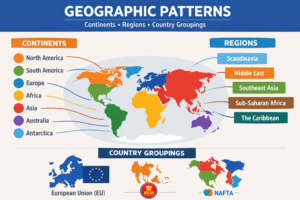
To ensure you are building a reliable mental map, we source all our geographic data from top-tier authoritative institutions. We align our regional frameworks with the United Nations geopolitical classifications and utilize cartographic insights from National Geographic. Understanding how to learn geography without memorizing requires accurate inputs; by using verified data, you ensure that the logical patterns you recognize today will remain valid and useful in any professional or academic setting worldwide.
Interactive Learning: Beyond the Static Map
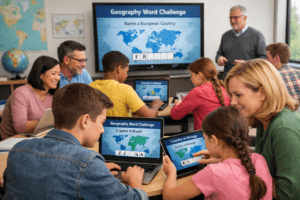
A vital part of how to learn geography without memorizing is active participation. Passive reading is the enemy of retention. Instead of staring at a map, engage with it through problem-solving. Using tools like the Scramble Words Game forces the brain to recognize geographic terms through pattern recognition rather than rote recall. When you unscramble “A-N-I-S-P” to find “SPAIN,” your brain is building a linguistic and spatial link that is much stronger than simply reading the word on a page. These how to learn geography without memorizing techniques turn study time into an engaging cognitive challenge.
Frequently Asked Questions
Is it really possible to learn geography without any memorization?
While you must learn the names of places, the “how” and “where” can be learned through logic. By using how to learn geography without memorizing techniques like pattern recognition, the names “stick” to the locations naturally because they have context.
What is the first step in learning geography through understanding?
Start with the “Big Picture.” Look at the continents and their relation to the oceans. Understanding the global layout is one of the most effective how to learn geography without memorizing starting points before diving into specific countries.
How do patterns help in geography?
Patterns, such as colonial history or climate zones, explain why certain languages are spoken in specific regions or why populations cluster. This context is a key part of how to learn geography without memorizing.
Are geography games better than textbooks?
Textbooks provide data, but games provide experience. For most learners, how to learn geography without memorizing is achieved faster through games because they offer immediate feedback and active engagement.
How can I remember the difference between countries that look similar?
Focus on their neighbors. One of the best how to learn geography without memorizing tips is “relative location.” If you know Germany is central and bordered by nine countries, you won’t confuse it with an island nation or a coastal state.
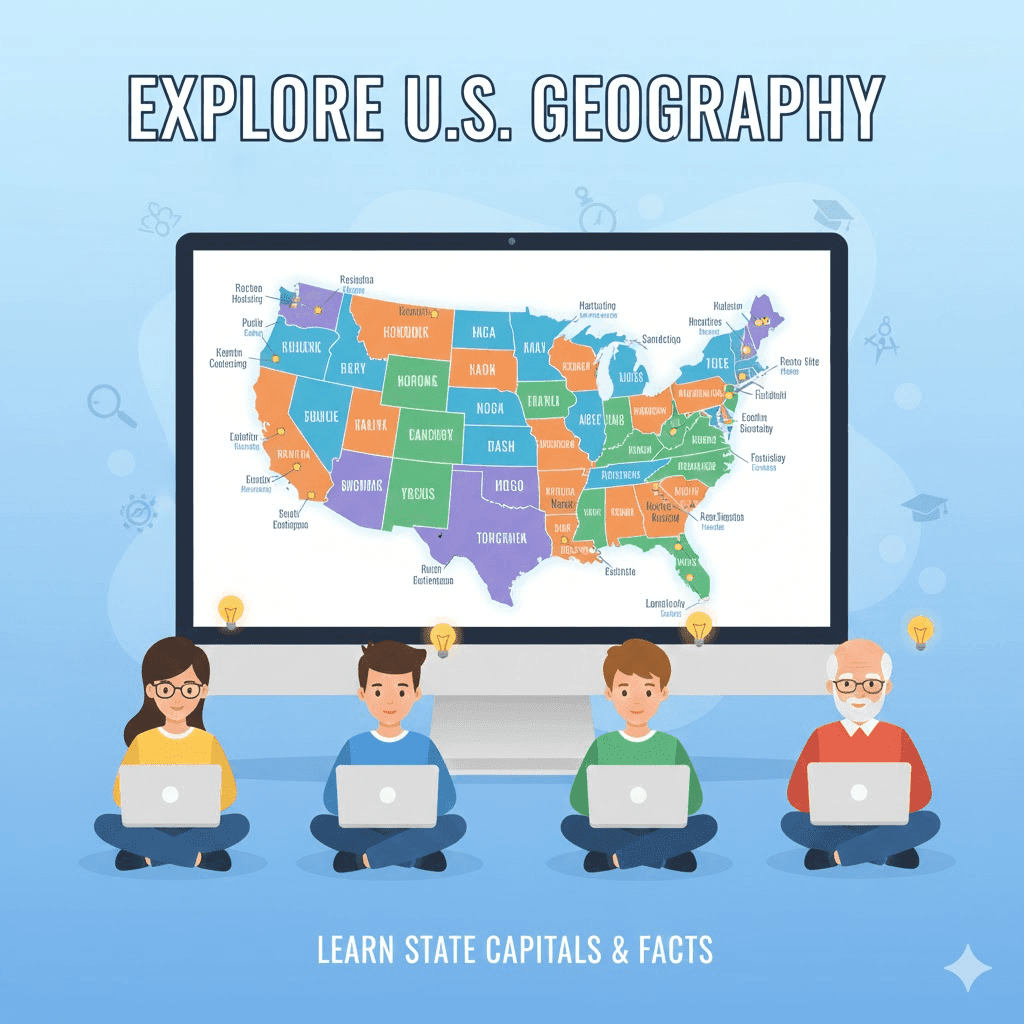
Does this method work for learning US state capitals?
Yes. By connecting a capital to the state’s history or its physical location (like being a central transport hub), you are using how to learn geography without memorizing strategies to anchor the city name to the state.
Conclusion: A New Way to See the World
Mastering the map does not require a photographic memory; it requires a curious mind. By applying the strategies of how to learn geography without memorizing—such as spatial encoding, physical logic, and interactive play—you can develop a deep and permanent understanding of our world. This approach not only makes learning more efficient but also far more enjoyable. As you stop memorizing and start understanding, the world map transforms from a confusing grid into a meaningful story of human history and natural wonder. Start your journey into how to learn geography without memorizing today and build a mental map that never fades.