The Science-Backed Guide on How to Improve Geography Memory Fast
The primary reason most people struggle to retain geographic data is not a lack of intelligence, but a failure of “encoding.” Most learners treat a map like a flat image to be photographed by the mind, but the human brain is not a camera; it is a processor of relational data. When you attempt to memorize a list of countries without a cognitive framework, you are experiencing “episodic memory failure,” where the information never makes the transition to long-term storage. If you are looking for how to improve geography memory fast, you must shift your focus from passive looking to active cognitive processing.
The solution to rapid geographic retention lies in “multisensory encoding” and “spatial anchoring.” By learning how to improve geography memory fast, you leverage the brain’s natural affinity for locations and shapes—a survival trait developed over millennia. Instead of seeing a name like “Kyrgyzstan” as a string of letters, you begin to see it as a specific shape tucked between the mountains of Central Asia. This approach reduces the mental friction associated with traditional study methods and allows for the rapid acquisition of complex global data in a fraction of the time usually required.
This authoritative guide provides a deep dive into the specific methodologies that answer the question of how to improve geography memory fast. We will examine the neurobiological benefits of “Active Recall,” the efficiency of “Spaced Repetition,” and the psychological impact of gamified learning. Whether you are a student preparing for a national geography bee or a professional seeking better global awareness, these strategies are designed to deliver maximum results with minimum cognitive fatigue. Let’s explore how to turn your mind into a high-performance geographic database.
Our Mission: Enhancing Cognitive Spatial Performance
Our mission is to empower learners by providing the most efficient how to improve geography memory fast strategies available today. We believe that geographic literacy is a vital skill in the 21st century, facilitating better understanding of geopolitics, economics, and environmental science. By teaching users how to improve geography memory fast, we aim to lower the barrier to entry for global education, making it possible for anyone to become a “map expert” through structured, science-based habits rather than tedious rote memorization.
Technical Deep Dive: Hippocampal Activation and Memory Consolidation
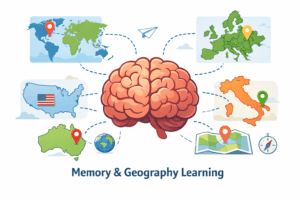
To understand how to improve geography memory fast, we must look at the hippocampus. This part of the brain is essentially your internal GPS. When you use “Visual Encoding,” you are stimulating place cells that fire only when you recognize a specific location. By combining this with “Active Recall”—the process of forcing your brain to retrieve a name without looking at a prompt—you strengthen the synaptic connections between these neurons. This process, known as Long-Term Potentiation (LTP), is the technical secret to how to improve geography memory fast. It transforms a fleeting thought into a permanent neural pathway.
Educational Philosophy: Active Recall vs. Passive Review
Most students fail because they spend hours “reviewing” (reading and highlighting), which is the least effective way to learn. Our philosophy on how to improve geography memory fast centers on the “Testing Effect.”
- Active Recall: You must close the book or turn off the labels and ask yourself, “Where is this?” This struggle is exactly how to improve geography memory fast, as it signals to the brain that the information is important.
- Spaced Repetition: Reviewing the same map at intervals (1 hour later, 1 day later, 3 days later) is the most efficient use of time. It exploits the “spacing effect,” which is a cornerstone of how to improve geography memory fast.
By implementing these two pillars, you stop wasting time on what you already know and focus intensely on your “memory gaps.”
User Personas: Who Needs Rapid Memory Improvement?
Identifying your specific needs helps tailor the how to improve geography memory fast techniques:
- The Exam-Taker: Students who need to master the locations of all 50 US states or 195 countries in a matter of days.
- The World Traveler: Explorers who want to navigate foreign regions with a sense of internal direction and cultural context.
- The Quiz Enthusiast: Individuals who enjoy competitive trivia and want to increase their recall speed for names and capitals.
- The Political Analyst: Professionals who need to understand the spatial relationship between conflicting nations or trade partners.
Each of these personas can find a specific “fast-track” within our how to improve geography memory fast framework.
Data Integrity and Peer-Reviewed Sources
Geography is an evolving science, and memory techniques must be grounded in accuracy. We utilize cartographic data sourced from the National Geographic Society and political boundary updates from the United Nations. Furthermore, our memory strategies are aligned with cognitive psychology research published by institutions such as Encyclopaedia Britannica. When you learn how to improve geography memory fast with us, you are using methods that are both geographically accurate and neurologically sound.
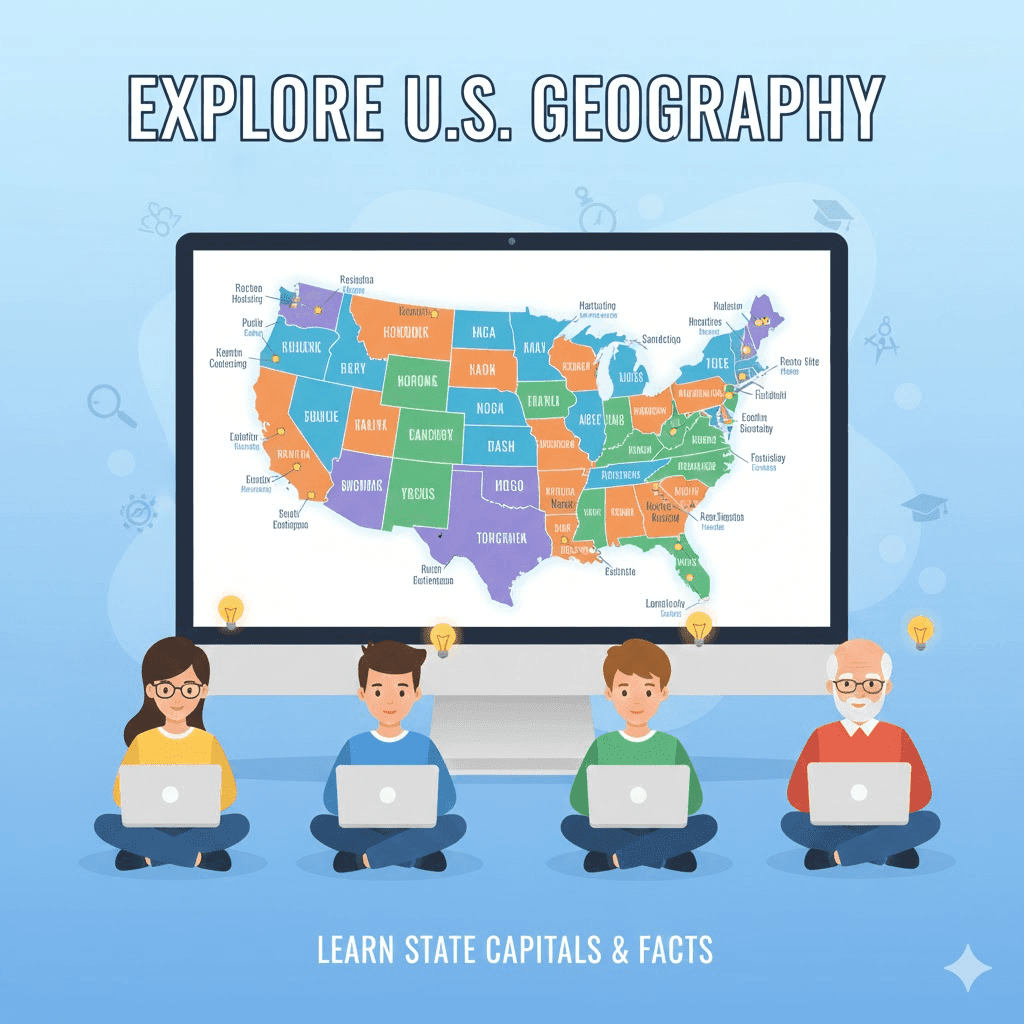
Interactive Tools for Accelerated Recall
Digital interaction is one of the premier how to improve geography memory fast methods. Games provide a “feedback loop” that books cannot. For example, the Trump Tweet Quiz or other topical quizzes help improve memory by attaching geographic facts to high-emotion or high-interest subjects. This “associative learning” is a powerful shortcut. When you connect a location to a specific event, person, or recognizable pattern, the brain “tags” that information as high-priority, which is precisely how to improve geography memory fast.

Frequently Asked Questions
What is the single fastest way to memorize a map?
The fastest way is using “Chunking.” Break the map into small regions (like the Balkans or Central America) and master one at a time. This is a primary technique in how to improve geography memory fast.
How many times do I need to repeat a country name to remember it?
It’s not about quantity; it’s about timing. Using Spaced Repetition, 4 or 5 reviews over a week are more effective than 50 repetitions in one day. This is how to improve geography memory fast without burnout.
Do mnemonics really work for geography?
Yes. Creating a story or acronym for a group of countries (like “B.E.L.” for Belgium, Estonia, Luxembourg) is one of the classic how to improve geography memory fast shortcuts.
Can I improve my memory at any age?
Absolutely. Neuroplasticity exists throughout life. Engaging with new maps and using how to improve geography memory fast techniques keeps the brain sharp and improves general cognitive recall.
Is visual learning better than reading for geography?
For spatial data, yes. The brain’s visual cortex is much larger than the areas used for processing text. That is why how to improve geography memory fast depends heavily on map-based study.
How does game-based learning improve recall speed?
Games introduce a time element. By forcing you to answer quickly, you train your brain to retrieve data faster, which is a key component of how to improve geography memory fast.
Conclusion: Achieve Geographic Fluency
Mastering the world map is not an endurance test; it is a strategic challenge. By implementing the how to improve geography memory fast strategies outlined in this guide—Active Recall, Spaced Repetition, and Visual Encoding—you can drastically reduce your study time while increasing your long-term retention. Geography becomes an intuitive part of your knowledge base rather than a series of disconnected facts. Start using these how to improve geography memory fast methods today and witness how quickly the world map becomes clear and familiar in your mind.