Understanding America In The Map Through Spatial Intelligence
Geography is more than just memorizing lists of names or coloring in borders. It is a fundamental exercise in spatial intelligence, a cognitive process that allows us to perceive, analyze, and understand our surroundings. When you attempt to locate america in the map, you are not merely looking for a landmass; you are engaging a complex neural network that interprets shapes, relative distances, and geopolitical context. Whether you are a student preparing for a quiz or an adult looking to sharpen your mental acuity, understanding how we visualize america in the map is the first step toward geographic mastery.
The human brain relies heavily on the hippocampus to process spatial information. This region of the brain helps us build “mental maps,” which are internal representations of the external world. When we talk about finding america in the map, we are essentially training the hippocampus to recognize specific patterns—the curvature of the Florida peninsula, the vastness of Texas, or the distinct cluster of New England states. By engaging with these visual cues repeatedly, we move information from short-term memory to long-term storage, a process known as consolidation.
In this guide, we will explore the science of cognitive geography and how it applies to identifying america in the map. We will look at the difference between political and physical maps, the distortion effects of map projections, and how gamified learning can drastically improve your recall speed. If you have ever struggled to pinpoint a specific state or understand the broader context of the Western Hemisphere, this deep dive into locating america in the map is designed for you.
The Cognitive Science of Map Reading
Why do some people instantly recognize america in the map while others struggle? The answer often lies in pattern recognition and active recall. Active recall is a learning principle where you stimulate your memory during the learning process. Instead of passively staring at an atlas, you must actively test yourself. When you challenge your brain to find america in the map without labels, you force your neural pathways to strengthen. This is why interactive tools are so effective.
For example, using a US States by Borders Quiz forces you to look at the shape of a state in isolation. This isolates the variable of “shape” from “context,” making your brain work harder to identify the region. Once you master individual shapes, placing america in the map becomes a much more intuitive process because you understand the puzzle pieces that make up the whole.
Furthermore, spatial intelligence is not fixed; it is plastic. This means you can improve your ability to visualize america in the map through practice. Neuroplasticity allows the brain to reorganize itself by forming new neural connections. Every time you successfully identify a region, you reinforce the connection associated with that geographic location. Eventually, the concept of america in the map transitions from a conscious search to an automatic recognition.
Defining the Region: Continents vs. Country
One of the most common points of confusion in geography is the terminology itself. When we search for america in the map, are we looking for the United States of America, or the continents of North and South America? In the United States, “America” is often used colloquially to refer to the country. However, in many other parts of the world, and in strict geographical terms, the Americas comprise two vast continents.
To truly master geography, one must be able to distinguish these contexts. Locating the United States of america in the map requires zooming into the North American continent, between Canada and Mexico. This distinction is crucial for cognitive clarity. If your mental map is ambiguous, your recall will be slower. You can test your ability to distinguish the US from other nations with the Countries of the World Quiz, which broadens the scope beyond just the 50 states.
Visualizing the United States of america in the map involves recognizing its distinct “shield” shape, flanked by the Atlantic and Pacific Oceans. The cognitive load decreases when you break this massive landmass down into smaller, digestible regions: the Pacific Northwest, the Midwest, the South, and the Northeast. By chunking information—a popular memory technique—you make the task of finding specific parts of america in the map much more manageable.
Visualizing the US: Borders and Shapes
The internal geography of the United States offers a fascinating challenge for spatial reasoning. Recognizing the United States of america in the map is one thing, but identifying the internal divisions requires a higher level of detail. The grid-like borders of the Western states contrast sharply with the river-defined borders of the East. This variation provides different “hooks” for your memory.
For instance, look at the “Four Corners” region where Utah, Colorado, Arizona, and New Mexico meet. This is a unique geometric feature that serves as a landmark when analyzing america in the map. Your brain uses these landmarks as anchors. Once you have anchored the Four Corners, it becomes easier to place surrounding states like Nevada or Oklahoma. You can practice this specific skill with the Guess the US States game, which encourages you to visualize the location of each state relative to its neighbors.
Another cognitive anchor is the Mississippi River. It slices vertically through the eastern half of the country, creating a natural border for many states. When you are trying to locate specific regions of america in the map, tracing the path of the Mississippi can orient you immediately. It separates the “East” from the “West” in a way that is historically and geographically significant. Understanding these physical features adds a layer of depth to your mental representation of america in the map.
The Role of Gamification in Learning Geography
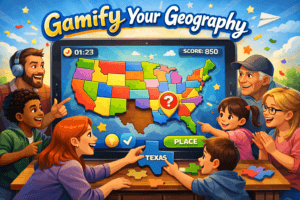
Traditional rote memorization is often tedious and inefficient. Gamification transforms the learning process by introducing elements of competition, immediate feedback, and reward. When you play a game to find america in the map, or specific parts of it, you trigger the release of dopamine, a neurotransmitter associated with pleasure and learning. This makes the experience sticky—you are more likely to remember where a state is if you enjoyed the process of finding it.
For younger learners, a 50 states quiz for 5th grade can be the perfect entry point. It simplifies the complexity of america in the map into a format that is accessible and fun. But this isn’t just for kids. Adults benefit from gamification too. Complex puzzles like the Scramble Words Game can help reinforce the spelling and nomenclature of geographic locations, which is a different but complementary skill to visual recognition.
Even unconventional associations can help. For example, cultural references or current events often tie back to geography. While it might seem unrelated, a Trump Tweet Quiz can inadvertently trigger memories of specific states or capitals mentioned in the news, thereby reinforcing their place in your mental image of america in the map. The brain is an associative machine; the more hooks you have, the better your retention.
Map Projections and Distortion
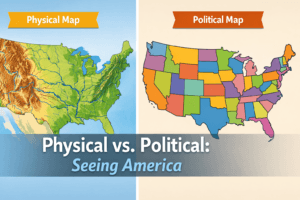
A critical aspect of spatial intelligence is understanding that every map is a distortion of reality. The Earth is a sphere (an oblate spheroid, to be precise), but maps are flat. Projecting a 3D object onto a 2D surface inevitably causes distortion in size, shape, distance, or direction. When you look at america in the map, specifically on a Mercator projection, it appears larger relative to the equator than it actually is. Alaska, for instance, often looks half the size of the contiguous US, which is an exaggeration.
To truly understand the scale of america in the map, one must consult equal-area projections like the Gall-Peters projection or look at a globe. This corrects the cognitive bias introduced by standard classroom maps. A well-rounded geographic education involves looking at america in the map through various projections to build a flexible mental model that can adjust to different visual representations.
This concept of distortion applies to internal geography as well. We often visualize states as floating entities, but they are physically interlocked. A blank us map for practice is an excellent tool here. It removes the textual labels and forces you to rely on shape and relative position. By stripping away the text, you force your brain to engage purely with the visual data of america in the map, deepening your spatial understanding.
State Capitals and Urban Geography
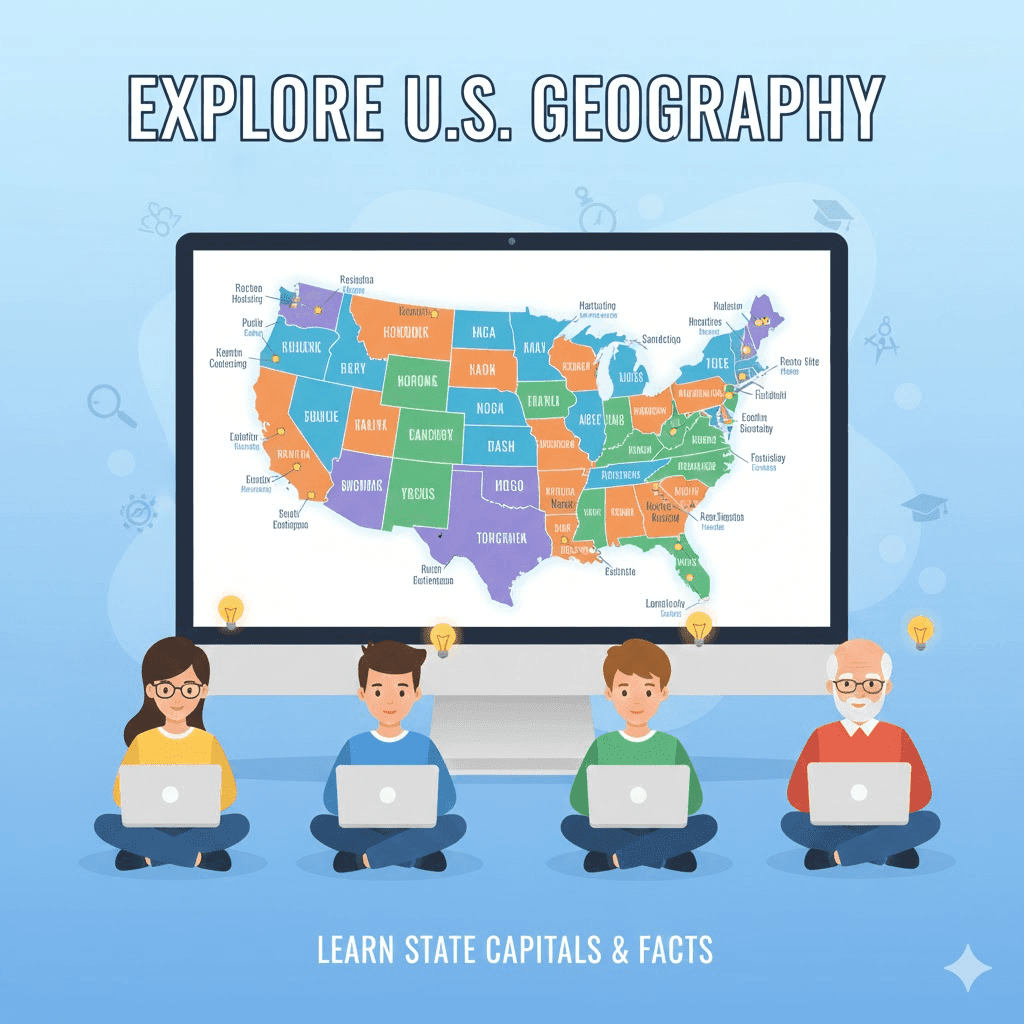
Locating the landmass is step one; populating it with data is step two. Knowing the capitals gives you pinpoint accuracy within the broader shape of america in the map. Many people can find New York State, but finding Albany requires a more granular level of focus. This shift from macro (state) to micro (city) exercises different cognitive faculties.
To practice this, the US State Capital Quiz is indispensable. It requires you to recall specific data points associated with the visual regions you have already mastered. Associating “Sacramento” with the shape of California strengthens your overall grasp of america in the map. It transforms the map from a collection of shapes into a network of political and economic hubs.
Furthermore, understanding state names is vital. The etymology of state names—often derived from Native American languages, Spanish, French, or English—adds a linguistic layer to your map. Exploring these names through a US State Name Quiz can provide mnemonic devices. For example, knowing that “Montana” comes from the Spanish for “mountain” helps you place it in the mountainous West when you are looking for that part of america in the map.
Advanced Spatial Challenges
Once you have mastered the basics, it is time to increase the difficulty. Cognitive growth occurs at the edge of your ability. If finding america in the map is too easy, you stop learning. You need to challenge your brain with harder tasks. This is where “blind” maps or shape-only quizzes come into play. Can you identify a state just by its silhouette, rotated 90 degrees? This requires robust object constancy, a key feature of spatial intelligence.
An interactive map of us states and capitals that removes outlines can be particularly challenging. It forces you to estimate borders based on the position of cities or rivers. This type of “fuzzy” logic is highly beneficial for real-world navigation. It simulates the way we navigate environments where boundaries are not always clearly marked. Mastering the location of america in the map at this level means you have truly internalized the geography.
For those who enjoy word puzzles, the Wordle Geography Game offers a unique twist. It combines vocabulary with geography, forcing you to think about the spelling of locations while visualizing them. This dual-coding (verbal and visual) is a powerful way to lock the image of america in the map into your long-term memory.
Global Context and Relative Position
Finally, we cannot look at america in the map in isolation. Its position relative to other countries affects climate, economy, and geopolitics. Understanding that Maine is closer to Africa than Florida is (a counter-intuitive geographic fact) requires a sophisticated understanding of the globe. When you view america in the map, you should also be aware of its neighbors.
Comparing the size of the US to other nations helps with scaling. How does the size of Texas compare to France? How does Alaska compare to Mexico? These comparisons refine your mental model. You can explore these relationships with the Capital Cities of the World Quiz or even the Flag Memory Game. While flags are symbols, they are proxies for the land they represent. Associating the Stars and Stripes with the image of america in the map reinforces national identity and geographic location simultaneously.
Even more specific quizzes, like the Flags of the World Quiz, help contextualize the United States within the global community. Recognizing the US flag is easy, but distinguishing it instantly from dozens of others requires rapid visual processing. This speed translates to faster map reading. When you scan a globe to find america in the map, your brain is essentially performing a high-speed pattern matching algorithm.
Techniques for Long-Term Retention
To ensure that your ability to locate america in the map remains sharp, you must employ spaced repetition. This technique involves reviewing material at increasing intervals. If you play a geography game today, play it again in two days, then in a week, then in a month. This signals to your brain that the information—the location of america in the map—is important and should be retained.
Combine this with variety. Don’t just use one type of map. Switch between satellite views, political maps, and physical relief maps. Each variation forces your brain to re-process the image of america in the map, adding more detail and flexibility to your mental representation. A satellite view reveals the green of the East and the brown of the arid West, adding ecological context to the political borders.
Additionally, teaching others is a fantastic way to learn. If you can explain how to find a specific region of america in the map to a child or a friend, you solidify your own knowledge. You can use resources like National Geographic Education or the USGS Maps to find high-quality reference materials to support your learning journey. These authoritative sources provide the gold standard for what america in the map should look like.
Conclusion: Your Mental Map is a Tool
Developing a strong mental image of america in the map is about more than trivia; it is about grounding yourself in the world. It enhances your ability to understand news, history, and environmental science. By leveraging the principles of spatial intelligence—pattern recognition, active recall, and gamification—you can transform the way you see the world.
Whether you are using a blank us map for practice or diving into a complex capitals quiz, every interaction strengthens your cognitive grasp of the country. So, the next time you look for america in the map, remember that you are exercising your brain’s most sophisticated navigation systems. Keep exploring, keep testing yourself, and watch as your mental map becomes a vivid, detailed, and indispensable tool for navigating life.