The Intersection of Cognitive Science and Geography
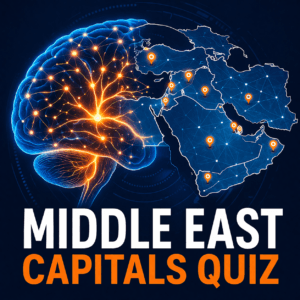
When it comes to building a more resilient, adaptable brain, the study of geography offers unique cognitive benefits that go far beyond rote memorization. Engaging with a capitals of middle east quiz is not just a test of what you know; it is a rigorous workout for your mind. The discipline of cognitive geography explores how human beings perceive, process, and navigate the spatial world around them. By actively working to mentally map complex regions, you stimulate neural pathways associated with spatial intelligence and visual memory. Taking a capitals of middle east quiz challenges your brain to construct an internal blueprint of a historically rich, geopolitically crucial, and geographically diverse landscape.
Spatial intelligence refers to the brain’s capacity to visualize and manipulate multidimensional spaces. This form of intelligence is deeply rooted in the hippocampus, the region of the brain responsible for memory consolidation and spatial navigation. When you repeatedly engage with a capitals of middle east quiz, you are essentially asking your hippocampus to organize abstract data points—in this case, city names and their corresponding geographic coordinates—into a coherent spatial matrix. Over time, this practice enhances neuroplasticity, allowing your brain to form stronger, more efficient connections. Every time you successfully identify a location in a capitals of middle east quiz, your brain reinforces these neural networks, making future retrieval faster and more accurate.
How a capitals of middle east quiz Enhances Spatial Intelligence
The concept of neuroplasticity is central to why interactive learning tools are so effective. Neuroplasticity is the brain’s ability to reorganize itself by forming new neural connections throughout life. When you participate in a capitals of middle east quiz, you are actively participating in the architectural remodeling of your brain. Instead of passively reading a map, a capitals of middle east quiz forces you to confront spatial relationships, borders, coastlines, and relative distances. This active engagement is a core principle in world map quiz educational games, which are designed to transform passive observation into active cognitive participation.
To truly understand a map, the brain must develop three types of spatial knowledge: landmark knowledge, route knowledge, and survey knowledge. Landmark knowledge is the basic recognition of specific points, such as knowing that Riyadh is a major city.
Route knowledge involves understanding the pathways between these points. Finally, survey knowledge is the ultimate goal—a comprehensive, bird’s-eye mental map of the entire region. Consistently practicing with a capitals of middle east quiz helps learners transition from basic landmark recognition to advanced survey knowledge. As you progress through a capitals of middle east quiz, you begin to visualize the spatial relationship between the Mediterranean Sea, the Persian Gulf, and the vast deserts of the Arabian Peninsula, creating a vivid mental map.
For those seeking a genuine cognitive challenge, stepping into the realm of a difficult geography quiz for adults provides the necessary friction to promote brain growth. The Middle East presents a particularly excellent canvas for this type of mental exercise. The intricate borders, historical shifts, and diverse topography require high levels of concentration and cognitive flexibility. By utilizing a capitals of middle east quiz, you are pushing your brain to categorize, associate, and retrieve complex geographical data under the mild, positive stress of gamified learning.
Active Recall: The Engine of a capitals of middle east quiz
One of the most scientifically validated methods for long-term knowledge retention is active recall. Unlike passive review techniques, such as simply staring at an atlas or re-reading a list of facts, active recall forces the brain to retrieve information from memory. Every question presented in a capitals of middle east quiz acts as a trigger for active recall. When the prompt appears, your brain must search its database, evaluate potential answers, and select the correct spatial or textual response. This intense mental effort is what makes a capitals of middle east quiz so incredibly effective for long-term retention.
Gamification further amplifies the benefits of active recall. By introducing elements like scoring, timers, and immediate feedback, a capitals of middle east quiz triggers the release of dopamine in the brain. Dopamine is a neurotransmitter heavily involved in reward, motivation, and learning. When you select the correct answer on a capitals of middle east quiz, the resulting dopamine spike not only makes you feel good but also signals to the hippocampus that this specific piece of information is valuable and worth storing in long-term memory. This neurochemical process is the foundation of effective learning, making a capitals of middle east quiz an essential tool for students, educators, and lifelong learners.
Immediate feedback is another crucial component of cognitive reinforcement. If you make a mistake on a capitals of middle east quiz, the immediate correction prevents the brain from consolidating inaccurate information. This rapid feedback loop allows for immediate course correction, ensuring that your mental map remains accurate. Because of this, integrating a world capitals quiz multiple choice format into your daily routine can drastically reduce the time it takes to achieve true geographic fluency.
Deep Dive: Regions Covered in the capitals of middle east quiz
To fully appreciate the cognitive benefits of this exercise, we must delve into the specific geographic and historical contexts of the region. As you navigate through a capitals of middle east quiz, you will encounter a variety of distinct nations, each offering unique spatial challenges for your mental map.
The Arabian Peninsula
The vast expanse of the Arabian Peninsula is a focal point of any comprehensive capitals of middle east quiz. Saudi Arabia, the largest country in the region, requires you to locate its inland capital, Riyadh. Visualizing Riyadh’s central position amidst the Najd plateau is a fantastic exercise in spatial anchoring. When you encounter Saudi Arabia in a capitals of middle east quiz, you must mentally differentiate its vast inland territory from its Red Sea and Persian Gulf coastlines. Moving south, Yemen’s capital, Sana’a, sits at a high elevation, offering a topographical contrast that enriches your mental map. Identifying Sana’a correctly in a capitals of middle east quiz reinforces your understanding of the mountainous terrain of the southern peninsula.
Oman, with its capital Muscat located along the coast of the Arabian Sea, presents another crucial data point. Placing Muscat correctly during a capitals of middle east quiz helps define the southeastern edge of the peninsula. Further up the coast, the United Arab Emirates requires you to pinpoint Abu Dhabi. Distinguishing Abu Dhabi from other regional hubs like Dubai is a common challenge in a capitals of middle east quiz, requiring precise spatial discrimination.
Nearby, the island nation of Bahrain, with its capital Manama, tests your ability to locate micro-geographies within the Persian Gulf. Successfully identifying Manama in a capitals of middle east quiz demonstrates high-resolution spatial awareness. Finally, Qatar’s capital, Doha, and Kuwait’s capital, Kuwait City, round out the coastal states, each serving as vital geographic markers when completing a capitals of middle east quiz.
The Levant and the Eastern Mediterranean
Moving northwest, the Levant region introduces a dense cluster of nations with intricate borders, making this section of a capitals of middle east quiz particularly stimulating for cognitive geography. Jordan’s capital, Amman, is a crucial anchor point in the Levant. Understanding Amman’s inland, elevated position relative to the Dead Sea is vital for mastering a capitals of middle east quiz. Lebanon, nestled along the Mediterranean coast, features the historic capital of Beirut. Visualizing Beirut’s coastal geography adds a critical maritime dimension to your spatial framework when tackling a capitals of middle east quiz.
Syria’s capital, Damascus, is often cited as one of the oldest continuously inhabited cities in the world. Placing Damascus correctly in a capitals of middle east quiz requires an understanding of its inland position relative to the coastal mountain ranges. To the south, Israel’s geography is highly complex, with Jerusalem serving as a major focal point. Navigating the borders of the Eastern Mediterranean in a capitals of middle east quiz demands precise recall and an appreciation for the region’s dense geopolitical landscape.
The Northern and Eastern Anchors
The northern and eastern edges of the region provide massive geographic anchors that define the broader map. Iraq, situated in the fertile basin of the Tigris and Euphrates rivers, features the central capital of Baghdad. Identifying Baghdad correctly in a capitals of middle east quiz requires visualizing the Mesopotamian plains that have shaped human history. To the east, the expansive nation of Iran presents a vast and varied topography, with its capital, Tehran, located at the foothills of the Alborz Mountains. Recognizing Tehran’s northern position within the country is a significant milestone in mastering a capitals of middle east quiz.
By systematically engaging with these diverse geographies through a capitals of middle east quiz, you are building a highly detailed, mentally robust map. Each session with a capitals of middle east quiz acts as a rep in the cognitive gym, strengthening the spatial connections between these historically and geopolitically vital cities. For deeper explorations into the physical geography of these regions, resources provided by organizations like National Geographic offer invaluable context that can further enrich your understanding.
Integrating the capitals of middle east quiz into Educational Environments
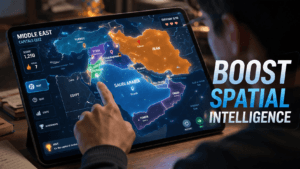
The application of cognitive geography is not limited to individual self-improvement; it is highly effective in structured learning environments. Educators are increasingly utilizing interactive tools to foster spatial intelligence in students. Implementing geography trivia games for classroom use transforms a traditionally dry subject into an engaging, competitive, and highly interactive experience. When students collaboratively or competitively engage with a capitals of middle east quiz, they benefit from social learning dynamics, peer motivation, and the gamified dopamine loops discussed earlier.
In a classroom setting, a capitals of middle east quiz can be used as a formative assessment tool, allowing educators to gauge spatial comprehension in real-time. The visual and interactive nature of a capitals of middle east quiz caters to various learning styles, particularly visual and kinesthetic learners who struggle with standard textbook memorization. By repeatedly exposing students to a capitals of middle east quiz, teachers facilitate the development of long-term survey knowledge, ensuring that students do not just memorize names, but actually understand the spatial reality of the globe.
Furthermore, understanding the historical and cultural context of a region enhances the cognitive anchoring of geographical facts. When students learn about the ancient trade routes that passed through Damascus or the maritime history of Muscat, they create rich associative networks in their brains. This cross-disciplinary approach makes performing well on a capitals of middle east quiz much more intuitive. For authoritative historical context on these capital cities, the Encyclopedia Britannica serves as an excellent foundational resource.
Expanding Your Cognitive Cartography Across the Globe
Mastering a capitals of middle east quiz is a significant achievement in cognitive geography, but it is only the beginning of your spatial intelligence journey. The neural pathways you have strengthened by completing a capitals of middle east quiz can be applied to diverse regions and entirely different types of spatial and contextual data. By cross-training your brain with a variety of interactive tools, you can build an unshakeable, holistic understanding of the world.
Mastering United States Geography
Once you feel confident in your performance on a capitals of middle east quiz, you can apply those same active recall techniques to the varied landscape of the United States. Start by challenging your knowledge of state capitals with the US State Capital Quiz. To build survey knowledge of the nation’s layout, the Guess the US States game is highly recommended. For a deeper cognitive challenge that focuses purely on spatial relationships and geometry, the US States by Borders Quiz is unparalleled. Finally, you can test your spelling and nomenclature recall with the US State Name Quiz.
Linguistic and Contextual Geography Puzzles
Spatial intelligence heavily overlaps with pattern recognition and linguistic processing. You can diversify your brain training beyond a capitals of middle east quiz by engaging with geography-based word puzzles. The Wordle Geography Game provides a daily test of deductive reasoning. If you enjoy anagrams and rapid cognitive processing, the Scramble Words Game offers an excellent mental sprint. For those who excel at recognizing contextual clues and associations, the Geo Connections Game is a brilliant way to link geographical concepts. You can also explore how geography intersects with digital culture through the Autocomplete Game.
Global Mapping and Demographic Challenges
To truly solidify the survey knowledge you began building with the capitals of middle east quiz, you must zoom out to the global scale. The comprehensive Countries of the World Quiz is the ultimate test of international border recognition. Combine this with the Capital Cities of the World Quiz to ensure your mental map is populated with the correct anchors. For a thrilling, fast-paced assessment of global knowledge, the Global Showdown provides an intense, gamified environment.
Visual Memory and Data Processing
Geography is not just about locations; it encompasses visual symbols, data, and human demographics. Engaging with the Flags of the World Quiz trains your brain to associate vivid visual patterns with specific spatial locations. For an added layer of visual cognitive training, the Flag Memory Game specifically targets short-term visual recall. Moving from visuals to data, the Higher Or Lower Population Game forces you to critically analyze demographic distributions. And for a completely different kind of contextual recall, taking a break with the Trump Tweet Quiz can flex different associative memory muscles before you return to your geographic studies.
Conclusion: Your Brain on Geography
The journey to geographical mastery is an ongoing process of cognitive refinement. By dedicating time to a capitals of middle east quiz, you are actively choosing to improve your spatial intelligence, strengthen your visual memory, and harness the power of active recall. The neuroscience is clear: engaging with complex, interactive spatial data reshapes the brain, promoting neuroplasticity and cognitive resilience.
Whether you are an educator looking to inspire students, a professional seeking a mental edge, or a curious mind eager to understand the world, a capitals of middle east quiz is a powerful tool in your intellectual arsenal. It is more than just locating Riyadh, Beirut, or Tehran on a map; it is about building a comprehensive, internal model of reality. Continue to challenge yourself, utilize gamified learning platforms, and trust in your brain’s remarkable ability to adapt, learn, and map the incredible world around us. Start your cognitive journey today, and see how quickly a capitals of middle east quiz can transform your understanding of the globe.