Understanding the globe is no longer just a matter of pointing at a colorful map; it is a profound exercise in cognitive development and spatial reasoning. For students, educators, and lifelong learners alike, engaging with a quiz for capital cities of the world offers an unparalleled opportunity to stretch the mind. Geography is not merely the memorization of disparate facts. Instead, it is the synthesis of culture, topography, and human history into a cohesive mental framework. When you dedicate time to a quiz for capital cities of the world, you are actively building a richer, more interconnected understanding of our planet.
The journey toward geographic mastery begins with recognizing how the human brain processes spatial information. Our minds are incredibly adept at forming mental maps, but this requires structured, repeated engagement. A high-quality quiz for capital cities of the world acts as the perfect catalyst for this mental mapping. Rather than passively reading a textbook or scrolling through an atlas, participating in a quiz for capital cities of the world forces the brain to retrieve information actively. This process of retrieval is the cornerstone of lasting knowledge acquisition and spatial intelligence development.
In this comprehensive guide, we will explore the fascinating intersection of neuroscience, gamification, and geographic education. We will dive deep into the mechanics of how a quiz for capital cities of the world can rewire your brain for better memory retention. Whether your goal is academic excellence, professional development, or simply the joy of mastering global trivia, understanding the cognitive benefits of a quiz for capital cities of the world will forever change the way you approach learning.
The Foundations of Cognitive Geography
Cognitive geography is a branch of science that studies how humans perceive, learn, and remember spatial environments. When you take a quiz for capital cities of the world, you are essentially participating in a cognitive geography experiment. You are asking your brain to recall a specific location, associate it with a political entity, and place it accurately within the broader context of the globe. This requires a symphony of neurological processes that strengthen overall brain function.
Every time you correctly answer a question on a quiz for capital cities of the world, you are reinforcing the neural pathways that connect the name of a city to its country and its physical location. This is where the concept of spatial intelligence becomes vital. Spatial intelligence is the ability to comprehend and manipulate visual-spatial information. By regularly challenging yourself with a quiz for capital cities of the world, you are directly enhancing this form of intelligence, which has positive carry-over effects into fields like mathematics, engineering, and architecture.
To truly appreciate the value of geographic education, one must look to authoritative bodies that champion spatial awareness. Organizations such as National Geographic have long advocated for immersive geographic education. Their research aligns perfectly with the idea that an interactive quiz for capital cities of the world is vastly superior to rote memorization. It transforms abstract political borders into tangible, interconnected puzzle pieces within the learner’s mind.
The Science of Spatial Intelligence
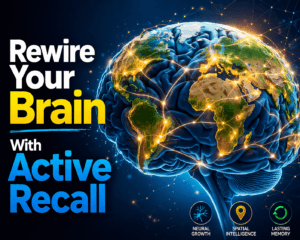
Spatial intelligence is not a fixed trait; it is a highly malleable skill that can be developed over time. Engaging with a quiz for capital cities of the world provides the exact type of mental workout required to expand spatial reasoning capabilities. When you visualize where a capital is located, you are mentally rotating the globe, zooming in on a continent, and pinning a specific coordinate. This mental gymnastics is profoundly beneficial for cognitive longevity.
Furthermore, taking a quiz for capital cities of the world encourages relational thinking. You begin to understand why certain cities became capitals based on their proximity to rivers, oceans, or central landmasses. You might notice these patterns while exploring a map of europe countries and capitals quiz, where historical trade routes deeply influenced urban development. The more you use a quiz for capital cities of the world, the more these geographical relationships become second nature, allowing you to synthesize global news and historical events with startling clarity.
For those looking to build foundational geographic knowledge closer to home before tackling the globe, starting with the US State Capital Quiz is an excellent stepping stone. Mastering local geography builds the confidence required to excel at a comprehensive quiz for capital cities of the world later on.
Neuroplasticity and the Hippocampus
The hippocampus is a seahorse-shaped structure in the brain heavily involved in learning, memory, and spatial navigation. When you immerse yourself in a quiz for capital cities of the world, the hippocampus goes into overdrive. It works to encode new spatial relationships and retrieve previously stored geographical data. Because the brain exhibits neuroplasticity—the ability to form and reorganize synaptic connections—regularly playing a quiz for capital cities of the world literally changes the physical structure of your brain.
Studies on navigation and spatial memory have shown that individuals who consistently challenge their geographic knowledge possess more robust hippocampal networks. Therefore, treating a quiz for capital cities of the world as a daily brain exercise can contribute significantly to long-term cognitive health. It is not just about knowing that Tokyo is the capital of Japan; it is about keeping the brain’s navigation centers agile, active, and healthy.
As you strengthen your hippocampus, you might find it easier to tackle other complex spatial tasks. For instance, transitioning from a global perspective to mastering the Guess the US States challenge becomes noticeably easier once the brain is accustomed to the rigorous demands of a quiz for capital cities of the world.
Why Gamification Works
Learning should never be a chore, and that is precisely where gamification enters the equation. A quiz for capital cities of the world utilizes game mechanics—such as scoring, timers, and immediate feedback—to drive user engagement. When you get an answer right on a quiz for capital cities of the world, your brain releases a micro-dose of dopamine. This neurotransmitter is responsible for feelings of pleasure and reward, creating a positive feedback loop that makes you want to keep learning.
This dopamine-driven loop is why a world capitals quiz multiple choice format is so incredibly popular among educators and students. It breaks down an intimidating amount of information into manageable, rewarding chunks. The intrinsic motivation generated by a well-designed quiz for capital cities of the world far outpaces the motivation derived from traditional study methods. You learn faster, retain more, and actually enjoy the process of becoming a geographic expert.
Gamification is highly versatile. If you want to mix up your learning routine, trying out the Wordle Geography Game provides a fun, linguistic twist on spatial learning. Taking a cognitive break with different game formats ensures that your return to a quiz for capital cities of the world is fresh and exciting.
Deep Dive: How Active Recall Rewires Your Brain
Active recall is a learning principle that involves actively stimulating your memory during the learning process. It contrasts sharply with passive review, such as re-reading notes. A quiz for capital cities of the world is the ultimate tool for active recall. When presented with a country name in a quiz for capital cities of the world, your brain must search its archives, retrieve the corresponding capital, and verify its accuracy in real-time.
This struggle to remember is exactly what cements the knowledge in your long-term memory. Each time you use a quiz for capital cities of the world and successfully recall a challenging capital like Ouagadougou or Ulaanbaatar, you are thickening the neural myelin sheath that protects that specific memory pathway. The more you test yourself with a quiz for capital cities of the world, the faster and more automatic that recall becomes.
Active recall works best when it is varied. To supplement your global learning, engaging with the US States by Borders Quiz forces the brain to recall shapes and adjacencies rather than just names. This varied retrieval practice ensures that when you return to a standard quiz for capital cities of the world, your mind is sharper and more adaptable.
Crafting the Perfect Learning Experience
To maximize the benefits of cognitive geography, you need a structured approach to learning. Simply taking a quiz for capital cities of the world once will not yield lasting results. You must integrate it into a spaced repetition schedule. Spaced repetition involves taking a quiz for capital cities of the world at increasing intervals—first after a day, then a week, then a month. This method flatlines the psychological “forgetting curve” and ensures lifelong retention.
A well-structured study session might begin with a broad overview using an interactive map of us states and capitals, moving smoothly into regional global challenges, and culminating in a comprehensive quiz for capital cities of the world. By scaffolding the difficulty, you prevent cognitive overload. A quiz for capital cities of the world should be challenging enough to stimulate active recall but accessible enough to prevent frustration.
For learners focusing on textual rather than visual recall, the US State Name Quiz provides excellent spelling and typing practice. This tactile engagement complements the visual and spatial demands of a quiz for capital cities of the world, creating a holistic educational ecosystem.
From Basic Mapping to Advanced Recognition
Beginners interacting with a quiz for capital cities of the world often rely on rote memorization. However, as expertise grows, learners shift to advanced pattern recognition. They start associating linguistic clues in city names with specific global regions. A highly effective quiz for capital cities of the world will often include multiple-choice distractors that are geographically plausible, forcing the learner to rely on deep knowledge rather than lucky guesses.
As you progress, the challenge should scale. Transitioning to a difficult geography quiz for adults ensures that your spatial intelligence continues to be pushed to its limits. When you consistently conquer a rigorous quiz for capital cities of the world, you develop an intuitive sense of global positioning that enhances your understanding of international relations, economics, and environmental science.
To further test your advanced recognition skills, the Countries of the World Quiz is a natural companion to capital city learning. Knowing the capital is only half the battle; knowing exactly where the country sits on a blank map is the ultimate proof of geographic competency.
Exploring Continents and Cognitive Load
Cognitive load theory suggests that our working memory has a limited capacity. Attempting to memorize all 195 global capitals simultaneously is a recipe for failure. A smart approach to mastering a quiz for capital cities of the world involves regional segmentation. Focus entirely on a capitals of europe quiz game before moving on to Africa, Asia, or the Americas. By managing cognitive load, a quiz for capital cities of the world becomes an empowering tool rather than an overwhelming obstacle.
Once you have isolated and mastered individual continents, combining them into a full-scale quiz for capital cities of the world is deeply satisfying. Your brain stitches together the regional maps into a seamless global projection. Institutions like the United States Geological Survey provide incredible mapping resources that can help you visualize these regions clearly before you test your knowledge on a quiz for capital cities of the world.
For those who love to decode and unscramble information, pairing your regional study with the Scramble Words Game can improve the speed at which you visually process geographical names. This rapid processing speed is a massive advantage when taking a timed quiz for capital cities of the world.
The Psychological Benefits of Geographic Mastery
The benefits of conquering a quiz for capital cities of the world extend far beyond academic achievement. There is a profound psychological boost associated with geographic mastery. Understanding the world map fosters a sense of global citizenship and empathy. When you know where a country is located because you learned it on a quiz for capital cities of the world, international news stories suddenly carry more weight and emotional resonance.
Furthermore, the confidence gained from consistently scoring well on a quiz for capital cities of the world translates to other areas of life. It proves to the learner that with the right application of active recall and spaced repetition, any complex system of information can be mastered. A quiz for capital cities of the world is, therefore, a masterclass in learning how to learn.
To keep the learning environment lighthearted and psychologically engaging, sometimes it helps to step completely outside the realm of traditional geography. Taking a brief, humorous detour with the Trump Tweet Quiz can reset your cognitive focus, allowing you to return to a challenging quiz for capital cities of the world with renewed energy and a relaxed mind.
Integrating Multimodal Learning Strategies
Every individual has a unique learning style. While some thrive on text-based questions, others require visual stimuli. The best way to prepare for a comprehensive quiz for capital cities of the world is to employ multimodal learning strategies. This means combining maps, text, audio, and visual identifiers like national flags. A quiz for capital cities of the world is much easier to conquer if you have already associated the capital city with its country’s flag.
Visual learners should heavily utilize tools like the Flags of the World Quiz. By linking the visual design of a flag to the name of a capital city, you create multiple mental hooks for a single piece of information. When you finally sit down to take a quiz for capital cities of the world, if the name of the capital escapes you, visualizing the flag might be the key to unlocking the memory.
To push your visual memory to its absolute peak, the Flag Memory Game is an outstanding resource. Training your brain to rapidly identify and match symbols will drastically reduce the time it takes you to answer questions on any timed quiz for capital cities of the world. It is about building a robust, interconnected web of geographic data in your mind.
Frequently Asked Questions about Spatial Learning
Educators and students frequently ask about the most efficient ways to improve geographic literacy. One common question is how often one should take a quiz for capital cities of the world. The consensus in cognitive psychology leans toward short, daily sessions. Spending ten minutes a day on a quiz for capital cities of the world is vastly more effective than cramming for three hours once a month. Consistency is the key to neuroplasticity.
Another common inquiry is whether digital tools are superior to physical maps. While physical maps provide excellent spatial context, a digital quiz for capital cities of the world offers the undeniable advantage of immediate feedback and randomized active recall. For the absolute best results, experts like those at Encyclopedia Britannica suggest combining the deep contextual reading of physical or digital encyclopedias with the fast-paced testing of a quiz for capital cities of the world.
Ultimately, the goal is to make learning an active, engaging process. Whether you are using a standard platform or our dedicated Capital Cities of the World Quiz, the consistent application of spatial reasoning and cognitive recall will yield incredible educational dividends.
Conclusion: Your Geographic Journey

Mastering the globe is a rewarding endeavor that sharpens the mind, expands cultural awareness, and significantly boosts spatial intelligence. By committing to regular practice with a quiz for capital cities of the world, you are doing much more than memorizing trivia; you are actively engaging in cognitive enhancement. The principles of neuroplasticity and active recall guarantee that your efforts will result in a stronger, faster, and more adaptable brain.
We encourage you to embrace the gamification of education. Let the dopamine loop work in your favor as you conquer continent after continent. A quiz for capital cities of the world is your passport to a deeper understanding of the planet we all share. It provides the structured challenge necessary to transform abstract geography into concrete, accessible knowledge.
Start your journey today. Challenge your friends, test your family, and push your own boundaries. Every time you engage with a quiz for capital cities of the world, the world becomes a little smaller, a little more familiar, and vastly more interesting. Keep exploring, keep testing yourself, and enjoy the lifelong benefits of true geographic mastery.